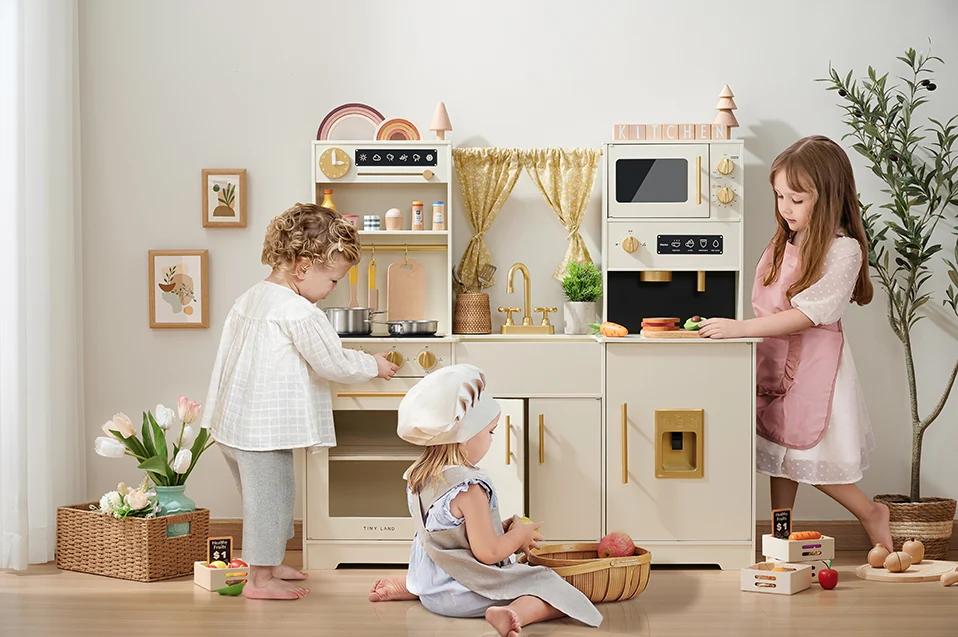
Finding ways to keep children entertained at home without resorting to screens is a challenge every parent faces. Play tents, activity gyms and imaginative toy sets offer a proven solution, creating dedicated spaces where kids can explore, build and create on their own terms. TINY LAND INC has built a reputation for designing children’s play products that combine sturdy construction with genuine imaginative appeal, making them a go-to choice for parents who want quality without compromise.
Why Dedicated Play Spaces Matter for Child Development
Children learn best through play and having a defined space dedicated to that play makes a measurable difference. When a child has a tent or activity station they can call their own, it fosters independence, creativity and a sense of ownership over their environment. Research in early childhood development consistently highlights that unstructured, imaginative play supports cognitive flexibility, problem-solving and social skills.
A well-designed play tent does more than occupy a child for an afternoon. It becomes a castle, a reading nook, a secret base or a cozy corner for quiet time. The best play spaces adapt to the child’s imagination rather than dictating a fixed narrative, which is precisely what thoughtfully designed indoor play equipment should do.
What TINY LAND INC Offers Families
The product range from TINY LAND INC spans play tents, climbing structures, activity mats and imaginative playsets designed for different age groups. Each product focuses on durability, safety and visual appeal, practical qualities that matter to parents as much as the features children notice.
Play tents in particular stand out for their versatility. Lightweight enough to move from room to room, easy enough for children to set up themselves and sturdy enough to withstand the kind of enthusiastic use that children’s toys are routinely subjected to. The designs lean toward themes that encourage open-ended play rather than locking children into a single storyline.
Activity mats and climbing sets address a different but equally important need physical development. Indoor climbing structures and textured activity surfaces give young children safe ways to build gross motor skills, balance and coordination during the hours they spend inside. These are not passive toys, they demand engagement and reward it with genuine developmental benefit.
Key Features to Look For in Indoor Play Equipment
When evaluating any children’s play product, a few factors consistently determine whether it earns a permanent place in the home or ends up at the back of a closet.
- Safety certifications confirm the materials and construction meet recognized standards for children’s products.
- Ease of assembly matters to parents; ease of use matters to children, the best products score well on both.
- Versatility extends the lifespan of a product, especially for children who outgrow single-purpose toys quickly.
- Compact footprint and storage convenience keep living spaces manageable when the toy is not in active use.
- Visual design that fits naturally into a home environment rather than dominating it with jarring colors.
Play Tents as Year-Round Staples
Unlike outdoor play equipment that sits unused through winter months, indoor play tents function as year-round staples. They work equally well during rainy days, cold winters and sweltering summers when being outside is not practical. A child who has a dedicated indoor space for imaginative play is less likely to drift toward passive screen time simply because there is nothing else to do.
Parents who invest in quality indoor play structures often find they pay dividends over several years, particularly for families with multiple children or a wide age spread. A well-made play tent that a toddler uses for imaginative play can serve a slightly older child as a reading nook or a younger sibling as a sensory space. TINY LAND INC designs with this longevity in mind, which is evident in the construction quality and the broad age ranges their products accommodate.
Setting Up an Engaging Play Corner at Home
The success of any indoor play product depends partly on how it is integrated into the home. A play tent tucked into an overlooked corner of a child’s bedroom, paired with a few favorite books and soft toys, becomes far more inviting than the same tent placed in the middle of a cluttered living room. Thoughtful placement amplifies the appeal of even simple play equipment.
Consider pairing a play tent with low shelving that keeps toys organized and accessible, allowing children to self-direct their play sessions without adult intervention at every step. Activity mats work well as the base layer in a play zone, providing comfort and a defined visual boundary that tells children this is their space.
Products from TINY LAND INC fit naturally into this kind of curated play environment. Their designs avoid the overly commercial aesthetic that makes some children’s products feel out of place in a thoughtfully decorated home, making them easier to integrate into existing spaces without a full room overhaul.
Choosing the Right Products for Different Ages
Age-appropriate design is not just a safety consideration, it is also a usability one. A play structure that is too simple bores an older child quickly; one that is too complex frustrates a younger child before they can benefit from it. Matching the product to the child’s current developmental stage ensures the investment actually gets used.
For infants and young toddlers, activity mats with varied textures and visual stimulation support sensory development and tummy time. For toddlers and preschoolers, play tents and climbing structures invite physical exploration and imaginative play. For school-age children, more complex playsets and activity stations that incorporate building, sorting or creative tasks maintain engagement through the years when children become more discerning about their toys.
Browsing the full range at TINY LAND INC makes it straightforward to identify products suited to a child’s specific age and interests, with clear descriptions that help parents make informed decisions without guesswork.
Why Quality Matters More Than Price
The children’s toy market is saturated with inexpensive products that promise much and deliver little. Flimsy construction, sharp edges, inadequate safety testing and materials that degrade quickly are common complaints with budget options. The true cost of a cheap toy that breaks within weeks, both financially and in terms of a disappointed child, often exceeds the cost of a more durable product purchased once and used for years.
Investing in play equipment built to last is not an indulgence; it is practical economics. Products that survive multiple children, handle daily use without deteriorating and maintain their safety integrity over time represent genuine value. Quality indoor play equipment also retains enough condition to pass on to younger siblings or donate when a child ages out of it, extending its useful life beyond a single household.
Children deserve play spaces that match their energy and imagination. Indoor play equipment that is safe, durable and thoughtfully designed transforms ordinary afternoons into hours of engaged, developmental play, without the need for screens, supervision at every moment or constant novelty.