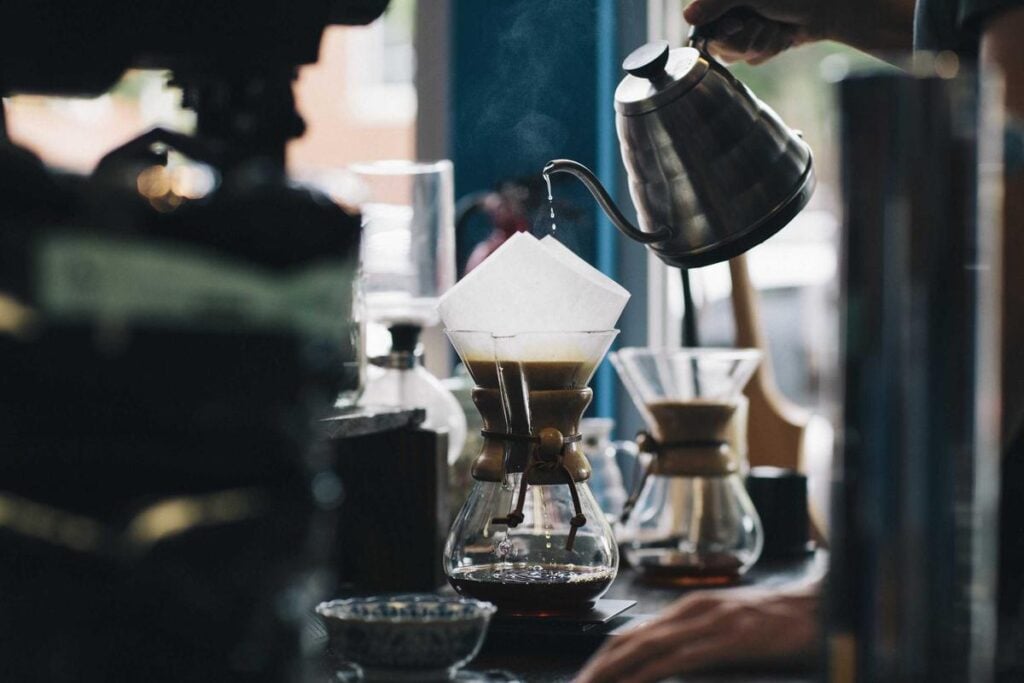
A pour-over dripper is a small tool with one job: let you pour steadily and get a cup that tastes like the coffee you bought.
We brewed in ceramic, glass, and metal cones, watching how fast the water left, how hot the slurry stayed, and how annoying the cleanup was on a weekday morning.
Flow and heat
A dripper that drains too fast tastes thin. One that stalls tastes heavy. Ceramic holds heat and stays hot on the counter afterward. Glass lets you see the drawdown. Metal is light and less fragile, and it loses heat faster if the kettle was timid.
- A size matched to the cup you actually drink.
- Ribs or a hole pattern that does not choke a paper filter.
- A material you are willing to preheat.
- A shape you can rinse without a production.
The dripper does not make the coffee. A steady pour and a sane grind do.
Tomorrow’s cup
Rinse the filter, preheat the dripper, and pour in stages you can remember half asleep. Change one thing at a time. A new dripper and a new grind and a new kettle on the same morning teaches you nothing.
Pick the cone you will rinse and use. The material is a preference after the cup tastes clean.